fireweed (chamaenerion angustifolium)
also known as:
great willowherb, bombweed
habitat:
temperate climates, often in barren or disturbed soil such as areas recovering from wildfire
edible parts:
flowers, leaves, and stems
Fireweed was one of my first successful foraging harvests. I’d been spending a lot of time at a cafe where they sold fireweed tea, and it was one of my staple choices when I didn’t know what else to order. It’s a delicious, balanced tea – dark but not tannic or bitter; sweet but not cloying; and it has just a slight hint of something I can’t really describe that makes me think of campfires in the summertime. So when I discovered it grows natively all over the pacific northwest, I couldn’t wait to try making fireweed tea myself. It sounded fun, plus “free” is a hell of a lot cheaper than $8 an ounce or whatever they charge for it at a specialty tea shop.
If you’re looking for fireweed in your area, your best bet is to check places where the soil has been disturbed by fire or forestry. The common name “fireweed” might make you think of the 420 variety, but it has nothing to do with it. The name comes from the fact that it’s often one of the first plants to begin growing again after a wildfire, often prolifically since nothing else has started to grow in its way yet1sometimes fields of fireweed even are planted intentionally after prescribed fires to help restore the soil and prevent erosion! neat 🙂. In the UK it’s sometimes called “bombweed” for a similar reason – it was common to see fields of it growing where bombs had fallen during WWII. Nowadays you’ll also often see fireweed growing along roadsides and highways, in open meadows, forest edges, and lots of other places. It’s happy to grow just about anywhere, and there isn’t any concern of overharvesting – the main thing to look out for is to pick a clean specimen. Avoid picking up roadside plants that are drenched in smog from vehicles, or might’ve been sprayed with pesticides.
identification
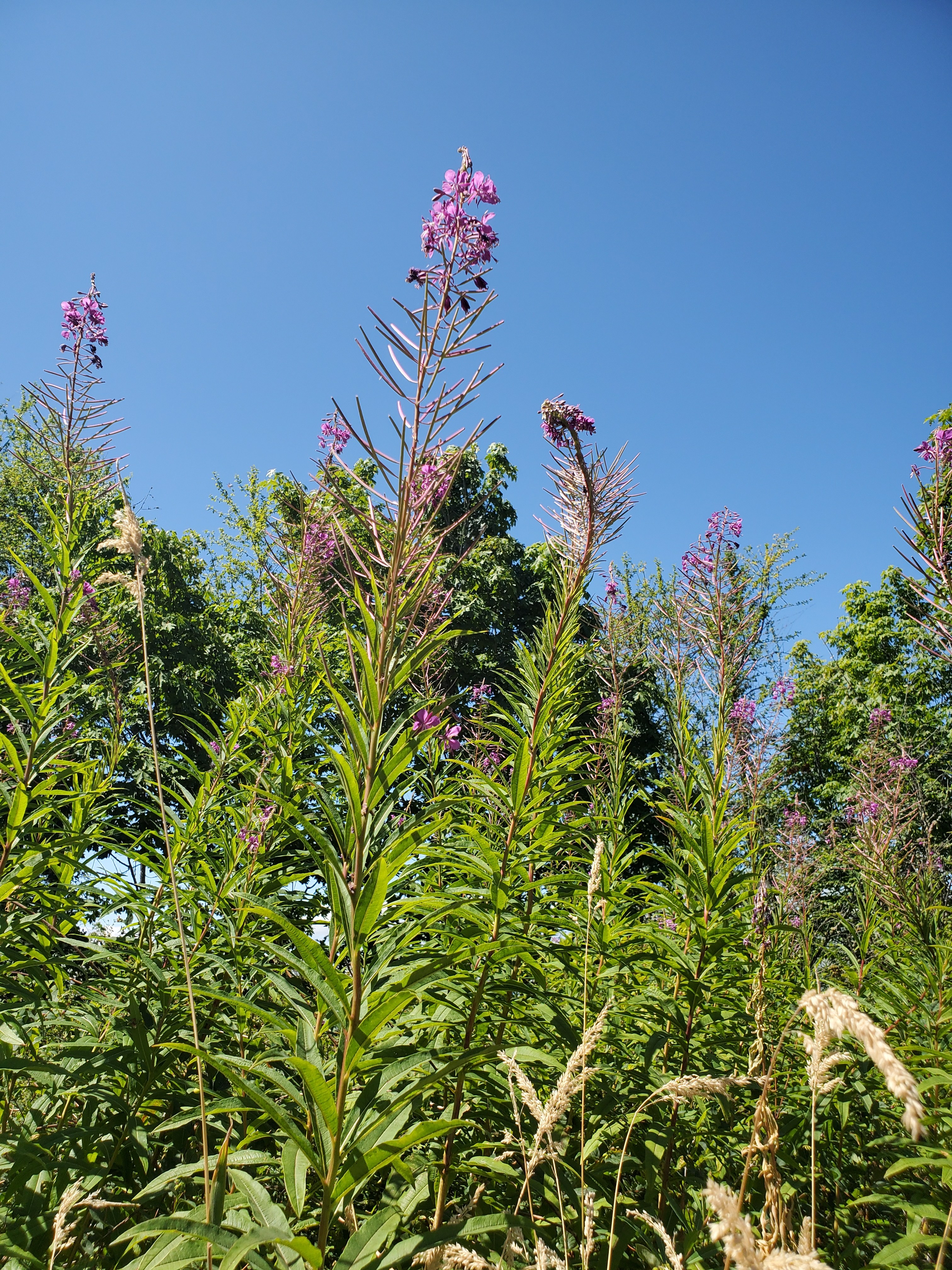
Identifying fireweed is easiest in the mid to late summer, after the characteristic pink-purple flowers have begun to bloom. It grows tall – sometimes up to 8 or 9 feet (2.5-3m) – so it’s usually easy to spot. Each fireweed plant is composed of a central stalk with long, narrow leaves sticking straight out from it.
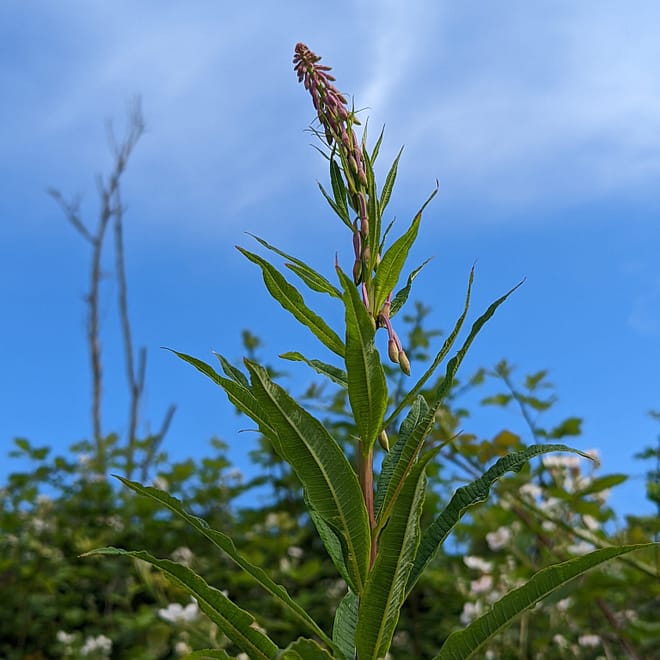
When it’s in bloom, the top of the stem will transition from leaves into bright pink flowers, making it even more noticeable. If you’re hunting for it earlier in the summer, you’ll just see clusters of pinkish-white buds.
lookalikes
There’s not much risk of confusing fireweed with another plant as long as you’re paying attention, but two that might look similar from a distance are purple foxglove and lupines.
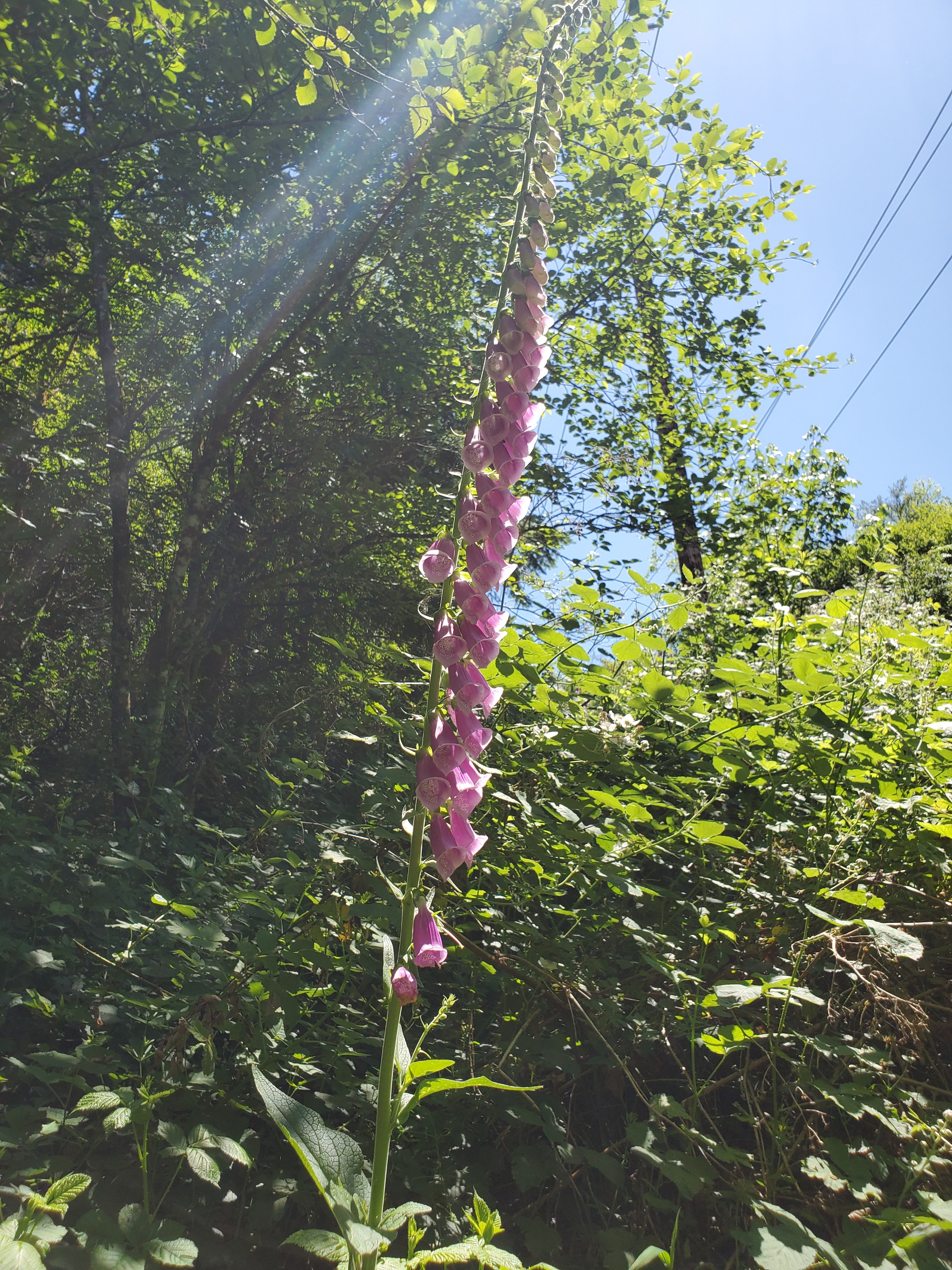

The key differentiating factor for Foxglove is the flowers: they’re noticeably larger and bell-shaped, instead of fireweed’s small, narrow blooms. They also tend to hang only on one side of the stalk, instead of being evenly distributed all the way around.
For Lupines, you’ll want to look at the leaves. While they are also somewhat long and narrow, the leaves are in separate bunches on multiple stems instead of one central stalk. You’ll also often notice small fuzzy looking pea pods growing on top, since lupines are part of the pea family.
harvesting & edibility
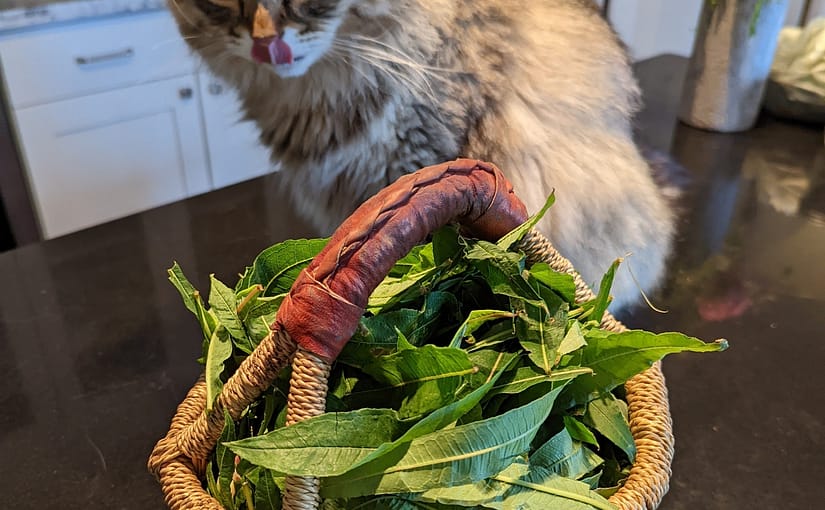
Most of the fireweed plant is edible, though I don’t really recommend eating it raw2if you do, choose young leaves and stalks. older leaves will be tough and not as flavorful. The most common preparations are to ferment the leaves as a tea, or (apparently, as I found out while writing this post) to use the flowers to make a jam. I’ll have to try that sometime.
For tea purposes, just grab a stalk and run your hand down it to remove the leaves. I usually get a mix of young and old leaves, since the younger ones tend to be sweeter, so if you only go for those you’ll end up with a much sweeter tea. If you prefer that though, go for it – and grab some flowers while you’re at it, since those can be tossed in with the leaves and will add a significant amount of additional sweetness as well. Personally I find it sweet enough already though, so I stick with just leaves. Read on for the recipe.
recipe: fermented fireweed tea
Ingredients
- freshly harvested fireweed leaves (optionally, flowers too – see notes)
Directions
- Clean: Rinse to remove any dirt or debris, and dry thoroughly. A salad spinner works great, or you can pat dry and spread the leaves out on a drying rack for a little bit
- Ferment: Prepare some clean jars or storage containers with lids to contain the fireweed while it’s fermenting. Taking leaves a handful at a time, tear them a few times and then crush and roll them in your palms to get them to release as much of their natural oils as possible. Add the crushed leaves to the prepared containers and seal the lids. Place them in a cool, dry location for 2-3 days.
- Dry: After a couple days fermentation, the containers should have a distinctly sweet scent when opened. (note: There should not be mold, though! if you do have mold, it’s likely that the leaves weren’t dried well enough after washing, and need to be tossed out). Spread leaves in a single layer in a dehydrator. Dry at 90F (32C) for about 4-6 hours or overnight, until leaves are completely dried and brittle.
- Store in an airtight container until ready to make tea.
Notes
- If you like a sweeter tea, you can also add fireweed flowers to the mix. Treat them the same as the leaves.
- 500 grams of leaves will result in approximately 100 grams of dried tea


