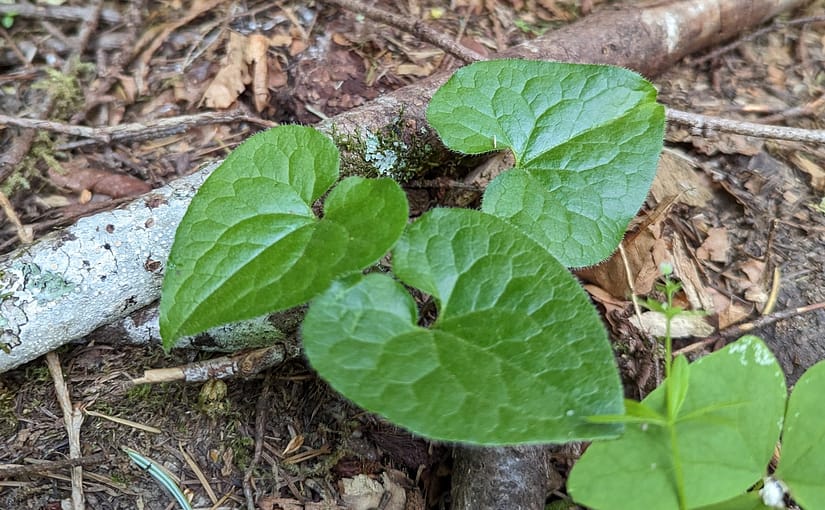
today’s wild edible profile is one of my favorites, we’ll be taking a look at wild ginger (specifically, western wild ginger).
this one took me a while to find for the first time since it’s got a number of common lookalikes, and it grows low to the ground so it’s often hidden by other larger plants, but once you find it you’ll start spotting it everywhere! the entire plant is edible, although the leaves and flowers can be quite bitter, so we’re really only interested in its long, trailing roots. let’s take a look at the basic info.
wild edible profile: western wild ginger
western wild ginger (asarum caudatum)
habitat:
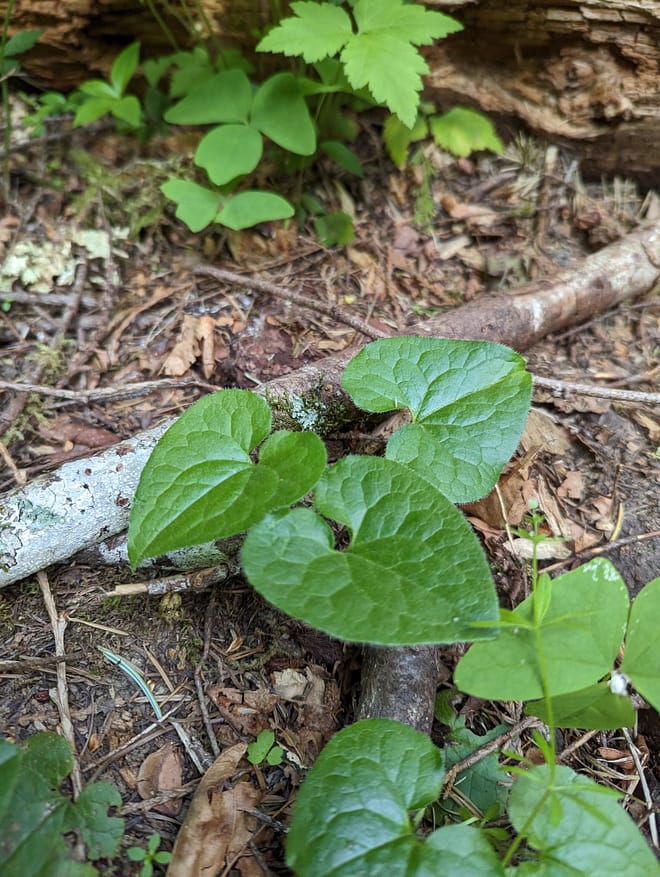
typically found in moist conifer forests of the pacific northwest. I found these specimens in an old-growth forest on the Olympic Peninsula.
edible parts:
entire plant, but only the roots are tasty
wild ginger makes a beautiful groundcover with its heart-shaped leaves and growth habit of spreading wide – so in addition to being delicious, it’s a great choice to add to a no-grass lawn as well (I’ve just put some in my own yard this year!).
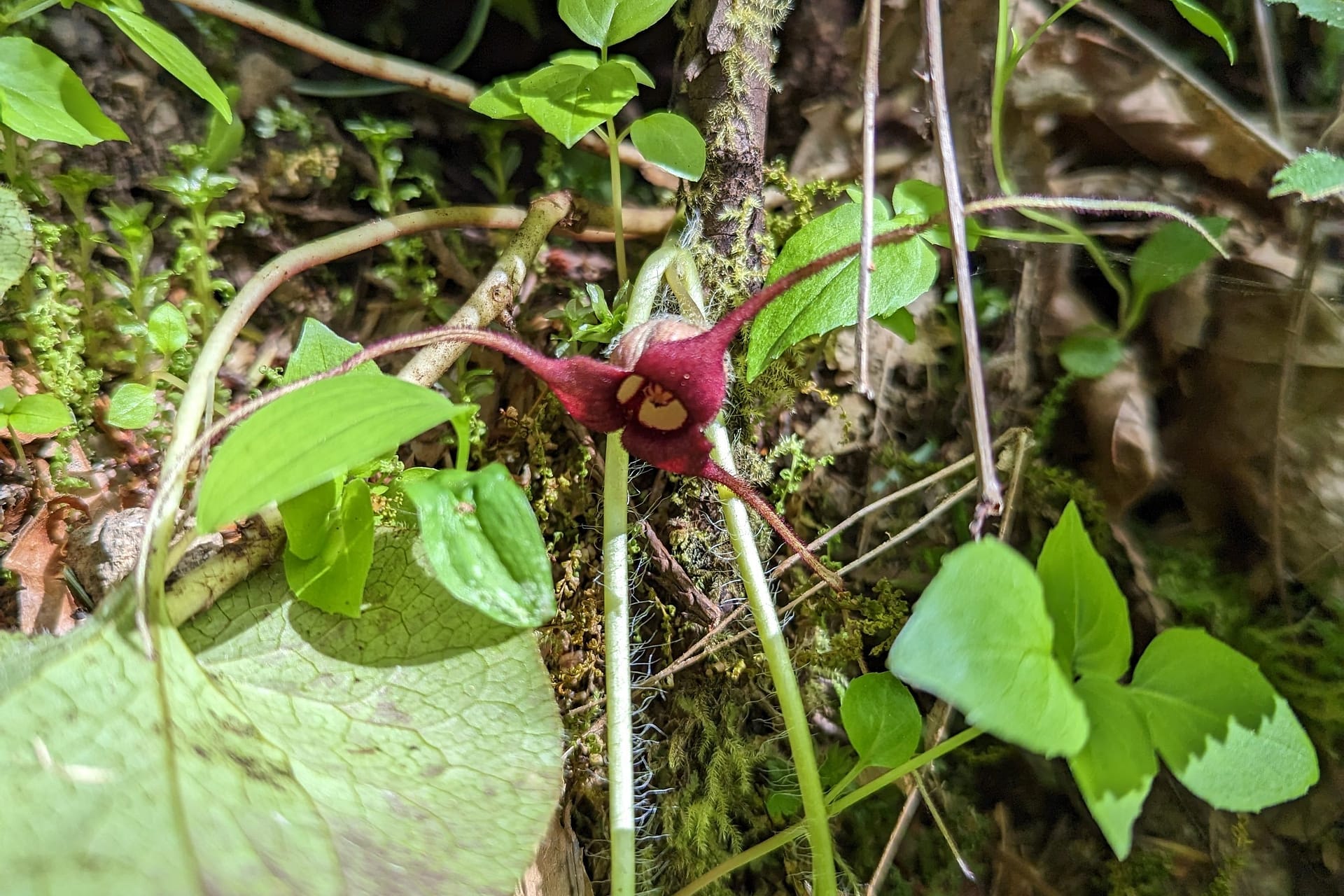
if you’re lucky, you might see it in bloom – the flowers are unusual looking with long, skinny tapered tips on each of the three petals. they can be hard to spot since they usually grow underneath the leaves, so you’ll have to search low to the ground to find one. they grow this way because one of the ways wild ginger reproduces is by attracting certain types of ants to crawl up inside the flower and carry the seeds away towards their nests.

but the main way wild ginger reproduces is by spreading its long, trailing rhizomes (underground roots) and sprouting new plants as it grows. this is good news for us, since that’s the part we want to eat! 🙂 the rhizomes of wild ginger grow very shallowly, sometimes barely covered by any dirt at all, so it’s very easy to harvest. before you go pulling up plants with heart-shaped leaves though, let’s take a look at some similar-looking plants you might mistake it for.
how to forage for wild ginger

wild ginger has two main lookalikes you’ll often see growing in the same habitats. the first and most common one that you’ll see a lot of is false lily of the valley.

just like wild ginger, these have heart-shaped leaves and grow low to the ground in clusters. they’re a beautiful groundcover as well, and while they can be eaten, they don’t really taste like much. you’ll also want to be careful not to confuse it with true lily of the valley, which is very toxic to people and pets alike. luckily, true lily of the valley rarely grows in the same habitat as the false variety (and likewise, rarely with wild ginger).
the easiest way to tell apart wild ginger from either lily of the valley is simply to look at the leaves. false lily of the valley has shiny, glossy leaves with perfectly straight lines running from stem to tip. compare this to wild ginger’s matte, leathery-textured leaves with their branching, fractal-like grooves, and you shouldn’t have trouble telling the difference!

another key difference that you’ll easily notice in spring and summer is the presence of small white flower clusters poking up from the leaves. as mentioned earlier, wild ginger’s blooms are purple, three-petaled, and grow low to the ground underneath the leaves, so if you see white flowers, you’ll know you’re looking at a false lily of the valley.

another possible lookalike to wild ginger is bunchberry, also called creeping dogwood. like false lily of the valley, the leaves are brighter green and somewhat shiny, but there’s a number of immediate giveaways that we’re looking at a different plant. first, you’ll notice that bunchberry leaves always grow in symmetrical patterns, and they’re missing the telltale heart-like notch at the base of the leaf.

and of course, there’s the flower in the center of each bunch! these pretty little flowers bloom in spring and develop into a clump of red berries later in the summer. they’re totally edible and delicious, so if you see some, don’t skip out on them – but we’ll cover those in another post later on.
finally, all of these lookalikes have one more important giveaway – none of them smell like ginger 🙂 when harvesting wild ginger rhizomes, snap one in half and give it a whiff – it’ll smell crisp and spicy just like the ginger you might buy at the grocery store. once you know what to look for (and smell for), you’ll be finding wild ginger all over the place.
cooking with wild ginger

now for the best part, time to eat! I love finding wild ginger when I’m out camping because it’s a delicious and versatile ingredient to add to just about anything you might be cooking at your campsite. you can use it just like you would any other kind of ginger. chop it up finely, since the texture can be a little woody if you leave the pieces too large, and toss it in a pan to let it get crispy and aromatic before adding it to whatever else you’re cooking (we made fried rice!).

if you don’t feel like cooking, wild ginger also makes an excellent tea (either dried or fresh) and is said to help with stomach aches. or if you’re feeling fancy, the roots can be candied by cooking them in sugar water for a crunchy, spicy snack.
and that’s about all there is to it! I hope you have good luck finding wild ginger on your next hike and get a chance to try it out 🙂